

From Too Much Egyptian Opposition to Too Little
اضيف الخبر في يوم السبت ١٨ - ديسمبر - ٢٠١٠ ١٢:٠٠ صباحاً.


From Too Much Egyptian Opposition to Too Little
|
From Too Much Egyptian Opposition to Too Little—and Legal Worries Besides
|
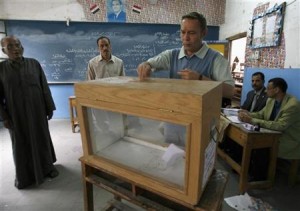
Egypt’s November 28 election and its December 5 run-off solved one problem for the ruling party—by removing the Muslim Brothers from the parliament—and created a host of others, including draining nearly all remaining credibility from the electoral system. Voter turnout apparently was lower than in the 2005 elections, less than 20 percent in the first round and less than 10 percent in the run-off elections.
Moreover, the extensive and organized abuses documented in reports by local observers and some judges suggest that the elections do not reflect the choices of those citizens who did trouble to vote. The security forces ran the show, manipulating the results in favor of NDP candidates, obstructing some judges from effectively overseeing the vote, blocking many observers from entering polling places, preventing others from remaining at the sites long enough to objectively evaluate the elections, and stopping supporters of some opposition candidates from voting. As a result of a 2007 constitutional amendment that removed full judicial supervision of the elections, the judicial branch and the impotent Higher Electoral Commission were unable to curb the interference of candidates and security forces in the electoral process. The number of judges was reduced from one at every ballot box to one judge for roughly every 20 polling stations. Opposition’s Lack of Representation The results from the second round of elections on December 5 yielded startled the Egyptian public, who expected there still to be a significant number of opposition deputies in new People’s Assembly even though the National Democratic Party (NDP) was determined to keep the Brotherhood out. But between the two rounds the Muslim Brotherhood and Wafd withdrew from the elections in protest of the irregularities, with the Wafd deciding to expel any deputies who insisted on taking their seats in the assembly. NDP candidates won 420 of the 508 overall elected seats (not counting 10 seats to be filled by direct presidential appointment), candidates from the Wafd Party won 6 seats, Tagammu’ won 5, four smaller parties each won a single seat, and 69 independents were able to claim victories in their districts.1 The results left the NDP in control of 87 percent of the seats in the People’s Assembly, while the organized opposition has less than 3 percent of the seats (15 seats for the parties and one seat for a lone independent affiliated with the Muslim Brotherhood who did not withdraw from the run-off). This means that the organized opposition will not have any real presence in the new assembly and thus will be unable to effectively perform its legislative or watchdog roles. The ruling establishment, executive branch, and People’s Assembly are now virtually identical, with each institution subject to the control of an overwhelming NDP majority. Today the uniformity of the People’s Assembly is reminiscent of the Egyptian parliament under President Gamal Abdel Nasser and any legislation and budgets it passes will certainly be viewed as the ruling establishment’s will. The absence of these three components of legitimacy—voter turnout, a fair electoral process, and balanced representation in the legislative branch combined with its relative autonomy from the executive branch—brings political life in Egypt to a new low. In addition to the legitimacy issue, the NDP has also created at least two new headaches for itself in the aftermath of these elections, one legal and the other political.
1. One of Tagammu’s five elected representatives, Abdel Aziz Shabaan, died a few days after the run-off election, leaving behind a vacant seat. Official election procedures require that a new election be conducted for the district formerly represented by Shabaan in order to choose his successor. |


 |
اجمالي القراءات
482
أضف تعليق
لا بد من تسجيل الدخول اولا قبل التعليق
ÇÎÑ ÇáÇÎÈÇÑ
more

اخبار متعلقة

دعوة للتبرع
مقالات من الارشيف
more


شفاك الله جل وعلا.!: انا عبد االله الذي جاء لكم شاكيا قبل قليل من...
الصراط المستقيم: ما معنى ان يقول الله سبحان ه وتعال ى للنبى فى...
سؤالان : السؤا ل الأول : ما معنى : ( وَكُل ٌّ أَتَو ْهُ ...
المتبنى لا يرث: بسم الله الرحم ن الرحي م والصل اة والسل ام ...
سؤالان : سؤالا ن من الاست اذ بهجت على أنا من...
moreالرئيسية | عن الموقع | التيار القراني | القرانبحث | الاتصال| اساسيات اهل القران
 Copyrights (c) 2006 MAH
 جميع الحقوق محفوظة(amir@ahl-alquran.com)